
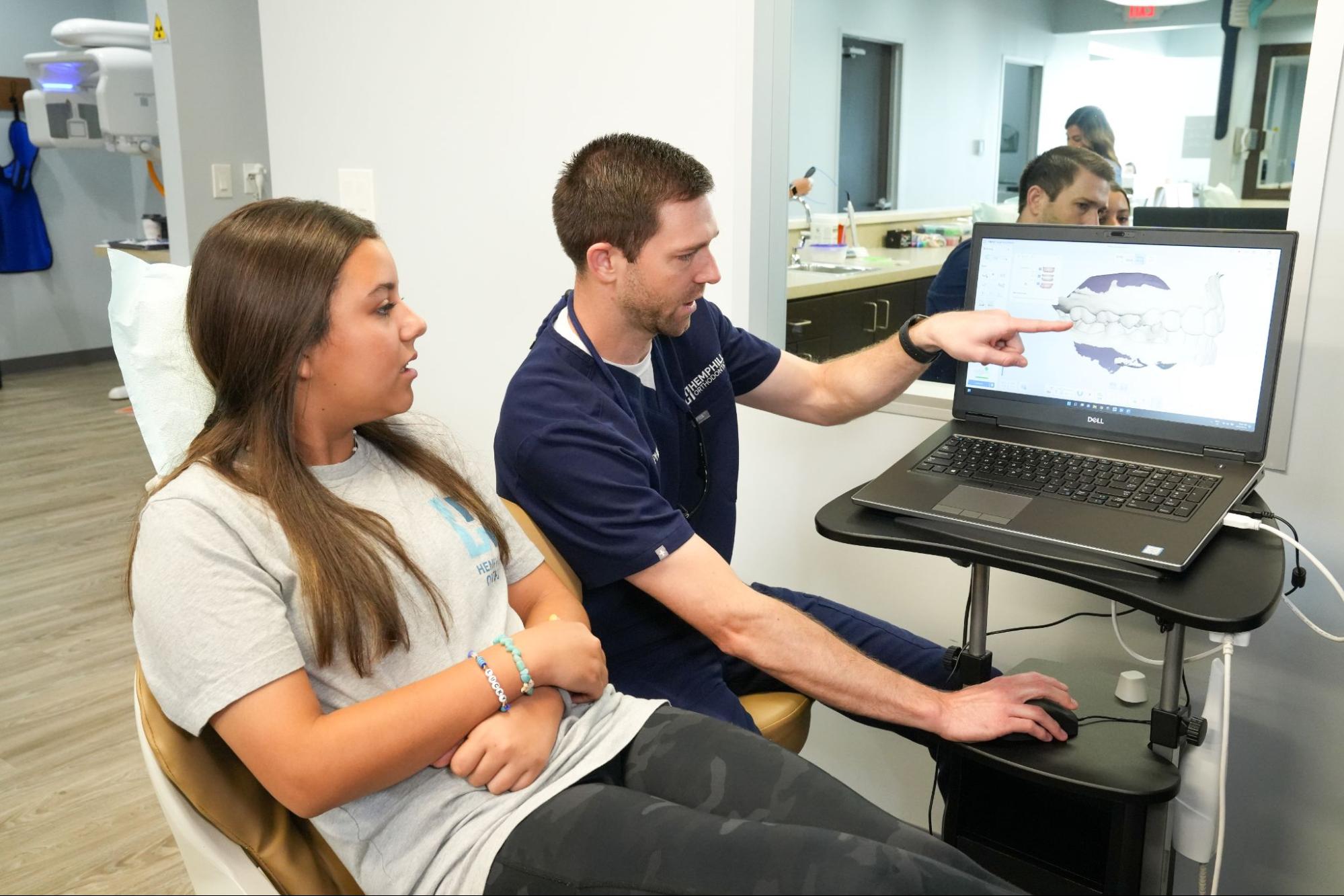
Monitoring clear aligner progress means tracking how your teeth move compared to your treatment plan over weeks and months. This process combines daily at-home checks with periodic orthodontic evaluations to confirm your aligners fit properly and your teeth shift as predicted. Consistent monitoring helps catch tracking issues early and keeps your treatment on schedule.
For treatments like 3M Clarity aligners, which rely heavily on patient compliance, staying on top of your progress makes a real difference. At Hemphill Orthodontics in Celina, TX, we encourage every patient to take an active role in their smile journey. When you know what to look for and check in regularly, you become a true partner in your own results.
If you are comparing clear aligner options, visit our Prosper Invisalign, Clear Aligners, Invisalign, and Celina Invisalign pages. For a broader look at braces, aligners, and treatment planning for Prosper families, start with our Prosper Orthodontics pillar page.
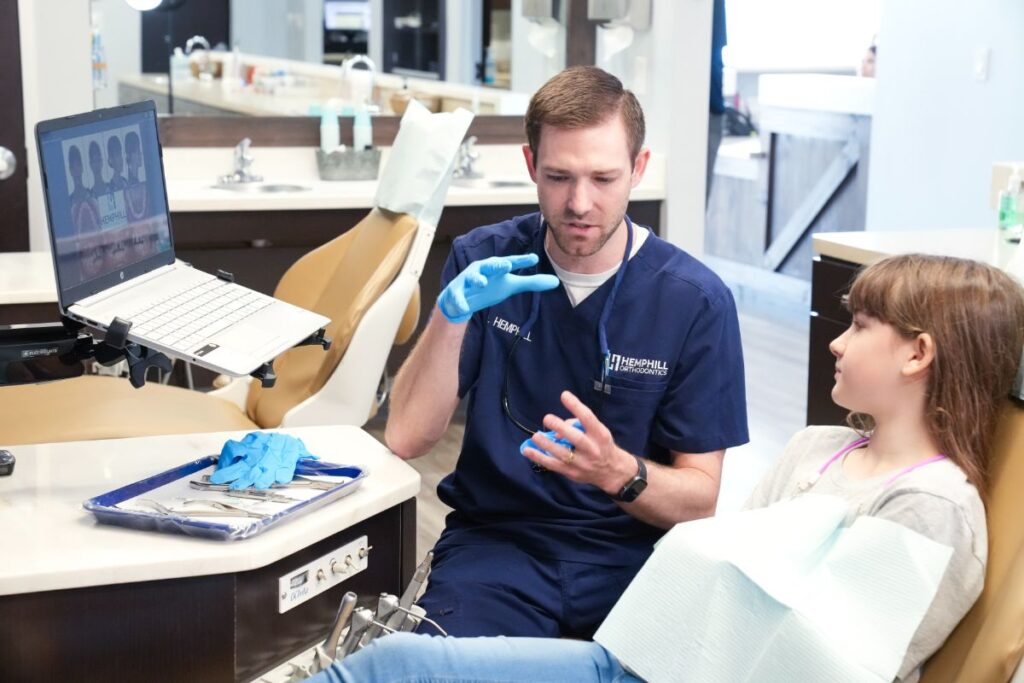
How to Track Your Aligner Progress Step by Step
Tracking your progress comes down to six habits: checking fit after each new tray, using a chewie to fully seat aligners, comparing teeth against your treatment plan, logging your daily wear time, taking progress photos, and attending scheduled check-ups. None of these require complicated tools or hours of your time. A few simple routines can keep you on course throughout treatment.
Check your fit after inserting each new tray. Stand in front of a mirror with good lighting. Look for gaps between the aligner and your teeth, especially along the edges. Your aligner should sit flush against each tooth without lifting or rocking.
Use a chewie to fully seat your aligners. Bite down on the chewie for 5-10 minutes after inserting a new tray. This gentle pressure helps the aligner settle into position and confirms proper fit. If you notice persistent gaps after using a chewie, that’s worth noting.
Compare against your treatment plan. If you have access to digital scans or a visual treatment timeline, check your teeth against where they should be at each stage. Many patients find this motivating because they can actually see the changes happening.
Log your wear time. Clear aligners work best when worn consistently each day. Track your hours using a simple phone app or a notebook. Consistent wear is one of the biggest factors in staying on schedule.
Snap progress photos every couple of weeks. Take a picture of your smile from the same angle each time. Side-by-side comparisons reveal changes that are hard to notice day-to-day.
Show up for your check-ups. Every 6-10 weeks, Dr. Hemphill, DDS, MS, evaluates your progress with professional scans and a clinical exam. These visits confirm that everything is moving as planned.
Patients and parents can also review our Orthodontics for Teens, Orthodontics for Adults, and Orthodontics for All Ages pages to better understand how treatment expectations can differ by age.
Why Monitoring Your Aligner Progress Matters
Keeping tabs on your treatment does more than satisfy curiosity. It directly affects your results and timeline.
When you catch tracking issues early, you prevent small problems from becoming bigger ones. A slight gap between your aligner and a tooth might seem minor, but left unchecked, it can throw off the entire sequence of trays. Early detection means quicker fixes.
Monitoring also reinforces good habits. When you see your teeth responding to consistent wear, you’re more likely to keep wearing your aligners as prescribed. That visual feedback creates a positive loop.
Celebrating small wins keeps motivation high. Noticing that a crooked tooth has straightened or a gap has closed makes the daily commitment feel worthwhile. These wins add up.
Regular monitoring reduces the likelihood of needing refinement aligners at the end of treatment. Refinements extend your timeline and can add to overall costs. Staying on track from the start helps you finish on time.
Finally, when you monitor at home, you give Dr. Hemphill better information during check-ups. Reporting what you’ve observed helps him make timely adjustments to your plan.
If you are deciding between aligners and braces, our Prosper Braces, LightForce Clear Braces, Metal Braces, and Our Treatments pages can help you compare the best fit for your smile.
At-Home Monitoring vs. In-Office Check-Ups
Both types of monitoring play distinct roles in your treatment. Neither replaces the other. The table below compares at-home monitoring with in-office check-ups at our Celina, TX office:
| At-Home Monitoring | In-Office Check-Ups |
|---|---|
| Daily mirror checks for fit | Professional digital scans |
| Wear-time tracking | Bite evaluation and adjustment |
| Visual fit assessment | Attachment integrity checks |
| Spots surface issues quickly | Confirms underlying tooth movement |
| Done on your schedule | Scheduled every 6-10 weeks |
At-home monitoring catches what you can see and feel. Is the tray sitting right? Are you wearing it enough hours? Does something feel off? These daily observations help you respond quickly to minor issues.
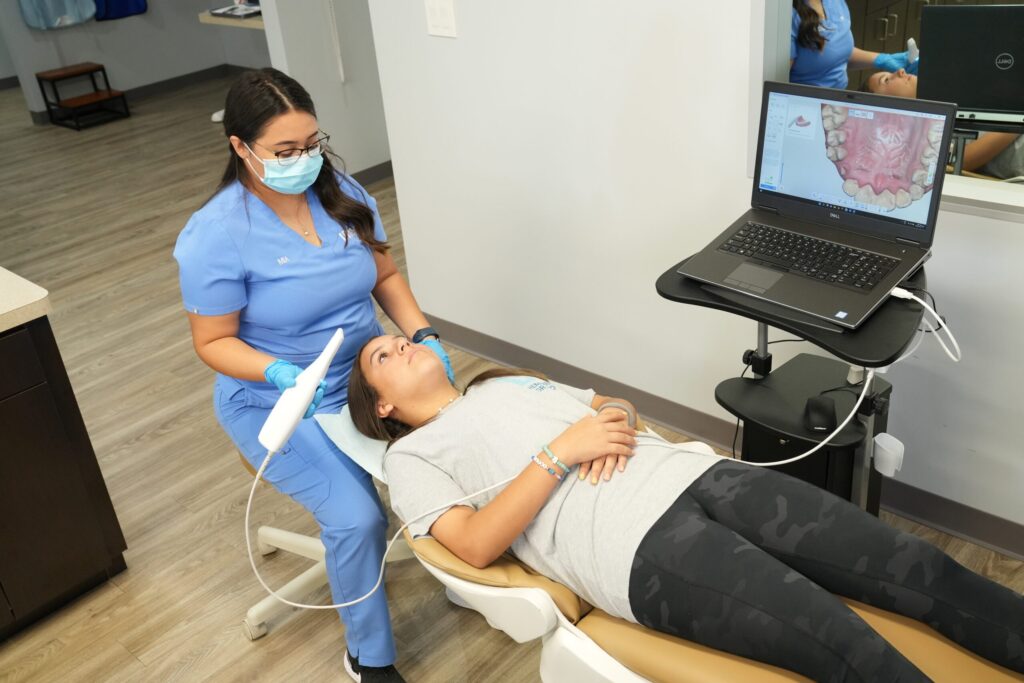
In-office check-ups reveal what’s happening beneath the surface. Dr. Hemphill uses digital scans to measure actual tooth movement and compare it against your treatment plan. He checks attachments, evaluates your bite, and assesses whether adjustments are needed.
At Hemphill Orthodontics in Celina, we combine both approaches. You stay informed and engaged between visits, while our team provides the clinical oversight that keeps everything on track. Families from Prosper, Celina, Anna, and surrounding communities can schedule a free consult to learn whether clear aligners are the right fit.
Does Monitoring Affect the Cost of Aligner Treatment?
Monitoring itself doesn’t add cost. In fact, it can lower your total expense by preventing refinements and keeping treatment on schedule. Here’s how the pieces fit together.
Most aligner treatment plans include scheduled check-ups in the total fee. You won’t pay extra for routine progress evaluations at Hemphill Orthodontics.
When you monitor carefully and maintain consistent wear, you’re less likely to need refinement trays. Refinements happen when teeth don’t track as predicted, and they can add time and expense to treatment.
Missed visits or poor compliance often extend treatment length. More trays, more time, and potentially more cost.
Extra scans or refinement aligners become necessary when tracking fails significantly. Catching problems early through monitoring helps avoid these extras.
Your free consult at Hemphill Orthodontics covers treatment planning, including a clear breakdown of costs and what’s included. We also offer flexible financing to fit your family’s budget.
Who Should Be Most Diligent About Monitoring?
Everyone benefits from monitoring, but some patients should pay extra attention.
Teens and adults new to aligner treatment. If this is your first time with clear aligners, building good monitoring habits early sets you up for success. You’re still learning what proper fit looks and feels like.
Patients with complex movements or attachments. More complicated cases require precise tracking. Attachments, those small tooth-colored bumps, help aligners grip teeth for difficult movements, and they need regular checking.
Anyone with a history of inconsistent wear. If you’ve struggled with compliance in the past, monitoring creates accountability. Seeing the connection between wear time and results can help reinforce better habits.
Patients between in-office visits. The weeks between check-ups are when issues can develop unnoticed. Regular at-home monitoring fills that gap.
Those using longer check-up intervals. Some treatment plans space visits further apart. More time between professional evaluations means at-home monitoring becomes even more important.
For younger patients, our Invisalign for Teens and Orthodontics for Teens pages can help families decide whether removable aligners or a fixed option like LightForce clear braces may be a better fit.
Frequently Asked Questions About Aligner Progress
How do I know if my aligners are tracking correctly?
Your aligners should fit snugly against all teeth without visible gaps. When you run your tongue along the edges, the tray should feel flush with your tooth surfaces. If you notice spaces, especially near the gum line or on specific teeth, your aligners may not be tracking properly. Using a chewie and confirming full seating helps you assess fit accurately.
What should I do if my aligner doesn’t fit properly?
First, use a chewie to try seating the aligner fully. If gaps persist after several attempts, go back to your previous tray for a few extra days to let your teeth catch up. Reach out to our Celina, TX team if the problem continues. Don’t skip ahead to the next tray, as this usually makes tracking issues worse.
How often should I have progress check-ups?
Most patients at Hemphill Orthodontics in Celina have check-ups every 6-10 weeks. Dr. Hemphill, DDS, MS, determines your specific schedule based on your treatment complexity and how your teeth respond. Some cases need more frequent monitoring, while others can go longer between visits.
Can I move to my next aligner early if it fits well?
It’s tempting, but no. Even if your new tray feels comfortable, your teeth and bone need time to stabilize in their new position. Moving too quickly can cause tracking problems later. Stick to your prescribed schedule unless Dr. Hemphill advises otherwise.
What are signs my treatment is on schedule?
Good signs include aligners that fit snugly from day one of each tray, visible progress in your photos, and smooth transitions between trays. You should also feel slight pressure when starting a new aligner that fades within a day or two. If trays fit loosely from the start or you see no changes over several weeks, mention this at your next visit.
Will I need refinement aligners at the end?
Not everyone does. Patients who maintain consistent daily wear and attend all check-ups often finish without refinements. However, some cases need extra trays to perfect the final result, especially for complex movements. Regular monitoring throughout treatment reduces the likelihood of needing refinements.
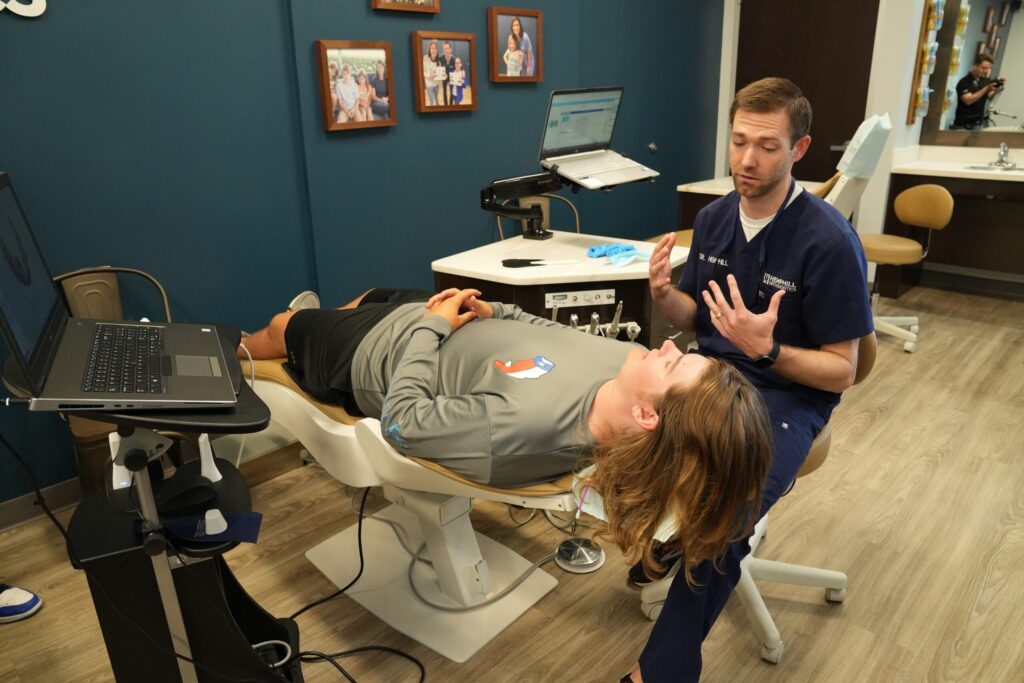
Want to learn more about clear aligners and how progress monitoring supports your smile journey? The team at Hemphill Orthodontics is happy to answer questions and walk you through what treatment looks like, from the first visit to your final tray.
Start with our Prosper Invisalign page, compare full treatment options on the Prosper Orthodontics pillar page, or schedule your free consult when you are ready.